NATIONAL MUSEUM OF HUTSULSHCHYNA AND POKUTTIA FOLK ART Y.KOBRYNSKYI – Kosiv – Ukraine
Ivano-Frankivsk Oblast
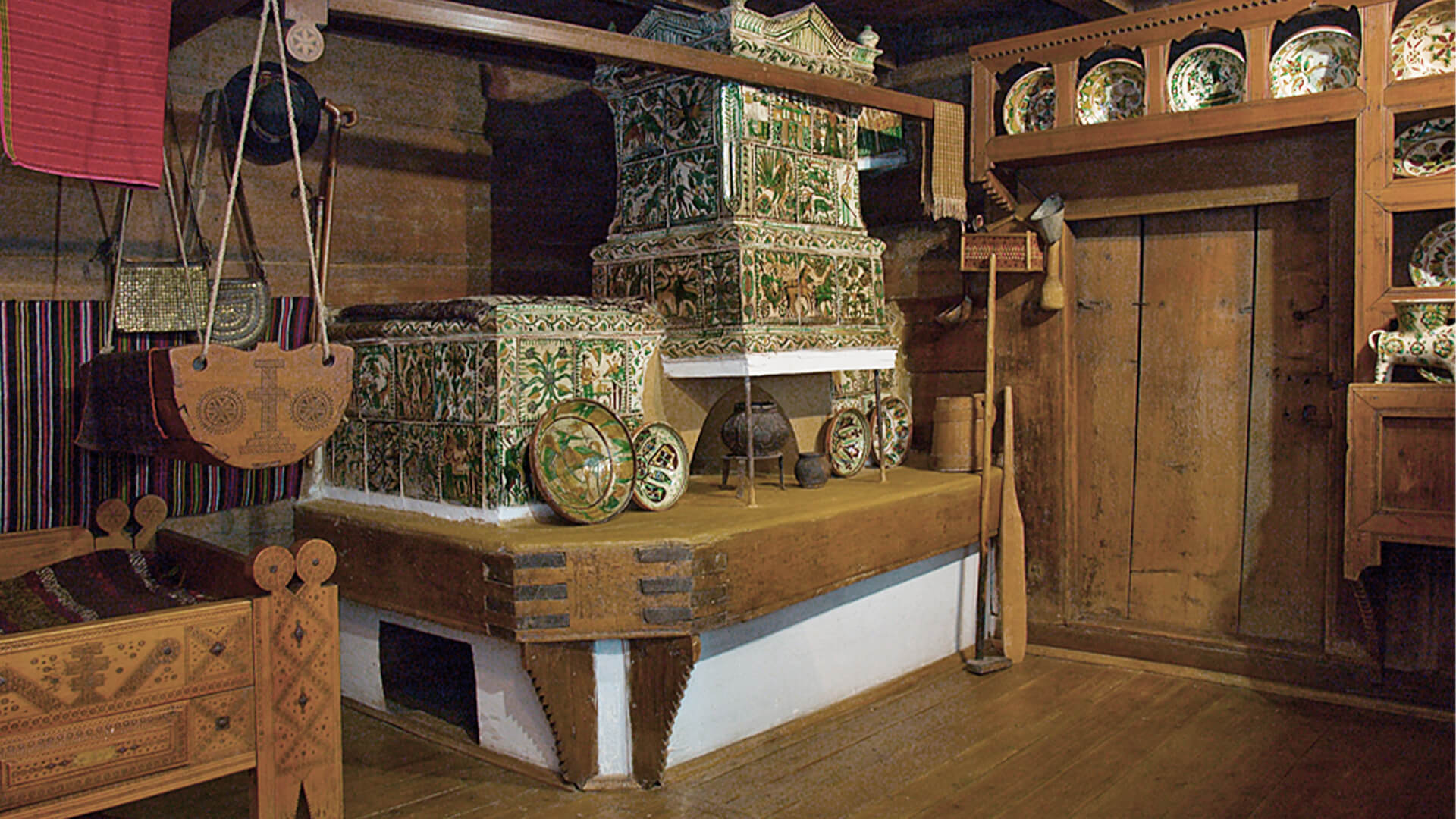
The Yosaphat Kobrynskyi National Museum of Hutsulshchyna and Pokuttia Folk Art is one of the most prominent Ukrainian institutions that research, preserve and promote traditional folk art of the Carpathian region. Founded in 1926, it was the first Ukrainian museum in Halychyna (Western Ukraine). The Museum’s collection includes more than 50 000 artifacts, a number of them dated to thousands of years. The traditional folk crafts of the regions of Hutsulshchyna and Pokuttia, such as wood carving, artistic leather and metal work, ceramics, traditional folk costumes, embroidery, woven textiles, and jewelry, Easter eggs, painting and sacred art are represented in the Museum. The oldest samples include sacred art objects, dating to the 17th-19th centuries, which were the parts of Hutsul churches. A traditional Hutsul house is also put on display in the museum. The personal belongings of Andriy Chaikovskyi, the famous Ukrainian writer, lawyer, political and civil activist whose heritage was neglected by the Soviets make a valuable part of the museum exhibition.
MUSEUMS
HYSTORY
The museum was founded in 1926 and opened to the public in the end of 1934. It is located in the former People’s House building in the city center. It is named in honour of Yosafat Kobrynskyi (1818–1901). In 1945, it was entitled the State Museum of Hutsulshchyna Folk Art.
Currently, the museum consist of three branches:
- Kosiv Museum of Hutsulshchyna Folk Art and Life (located in Kosiv)
- Museum of Pysanka (located in Kolomyia). Opened in 1987 gathers a collection of more than 12,000 Easter eggs from all over the world
- Yaremche Museum of Ethnography and Ecology of the Carpathians (in 2007 it joined the main museum in Kolomyia), located in Yaremche. It focuses on organizing festivals, seminars and conferences.
WORKPIECE
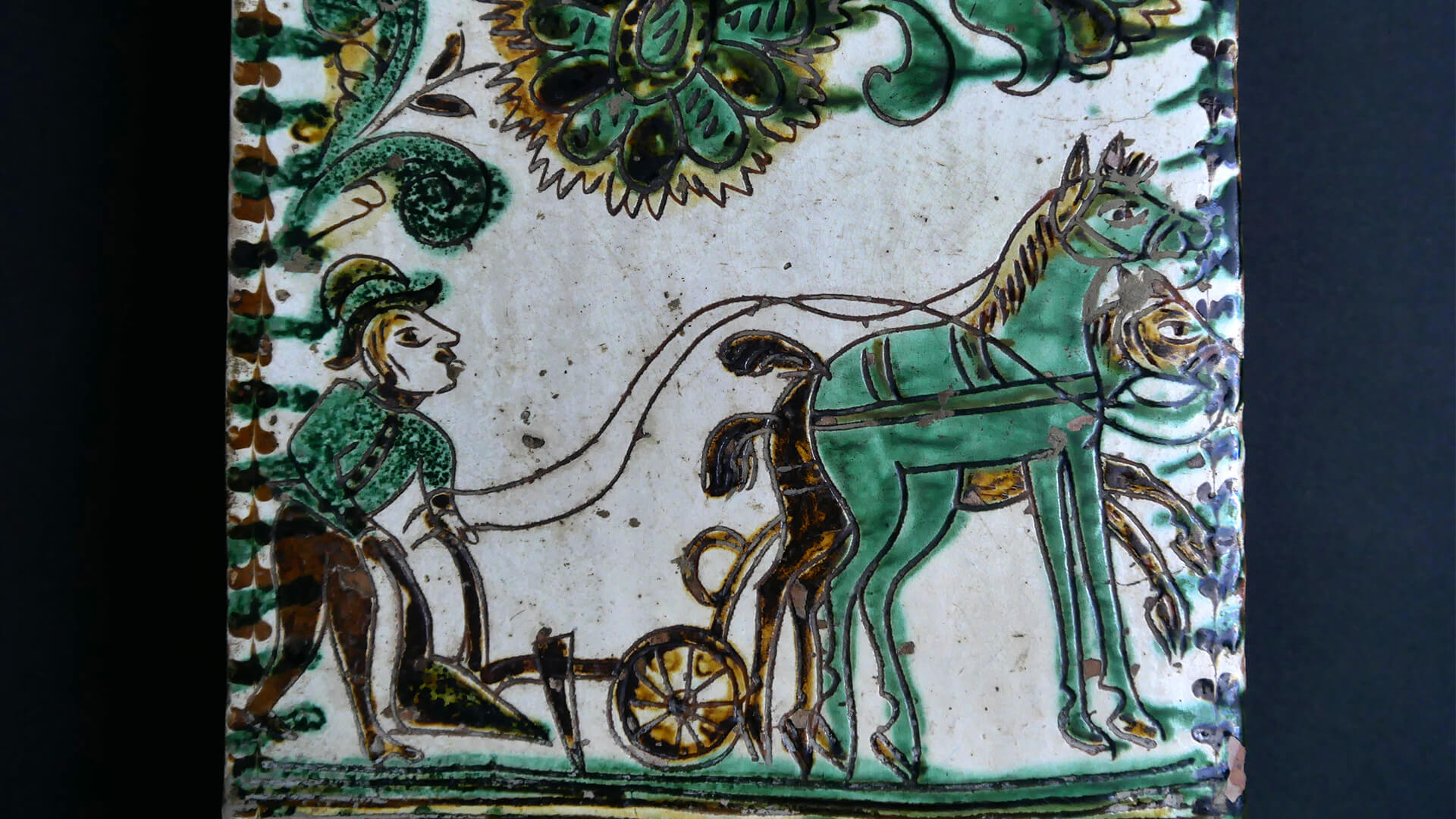
The tiles were used to decorate ovens in the traditional wooden houses of the hutsul people (highlanders) in the Carpathian mountains in Ukraine.
The tile was crafted by Oleksa Bakhmatiuk, the most famous Kosiv ceramist of the 19th century whose artistic works are rich in scenes and motifs. His heritage includes more than a hundred stoves, each depicting a couple of dozen scenes.The artisan also created ceramic candlesticks, bowls, plates, vessels. The tile represents a tradition of the decorative Kosiv ceramics. It depicts a scene of plowing a field. The plough is dragged by two horses led by a man with a moustache who wears a hat. The composition is completed with the floral motive and a typical flower of Oleksa Bakhmatiuk’s.